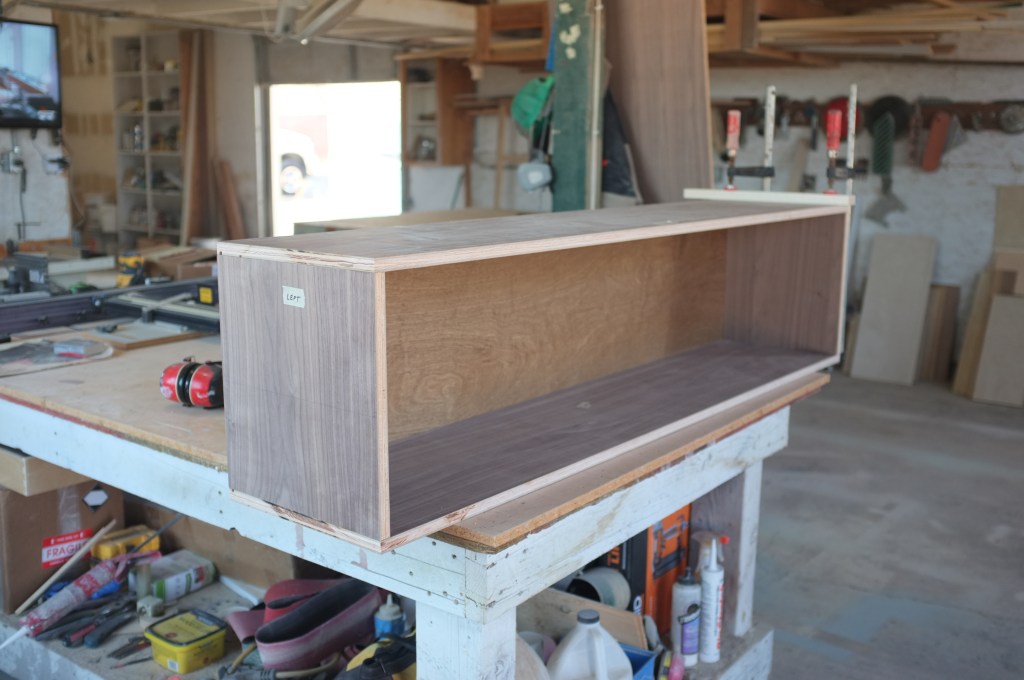
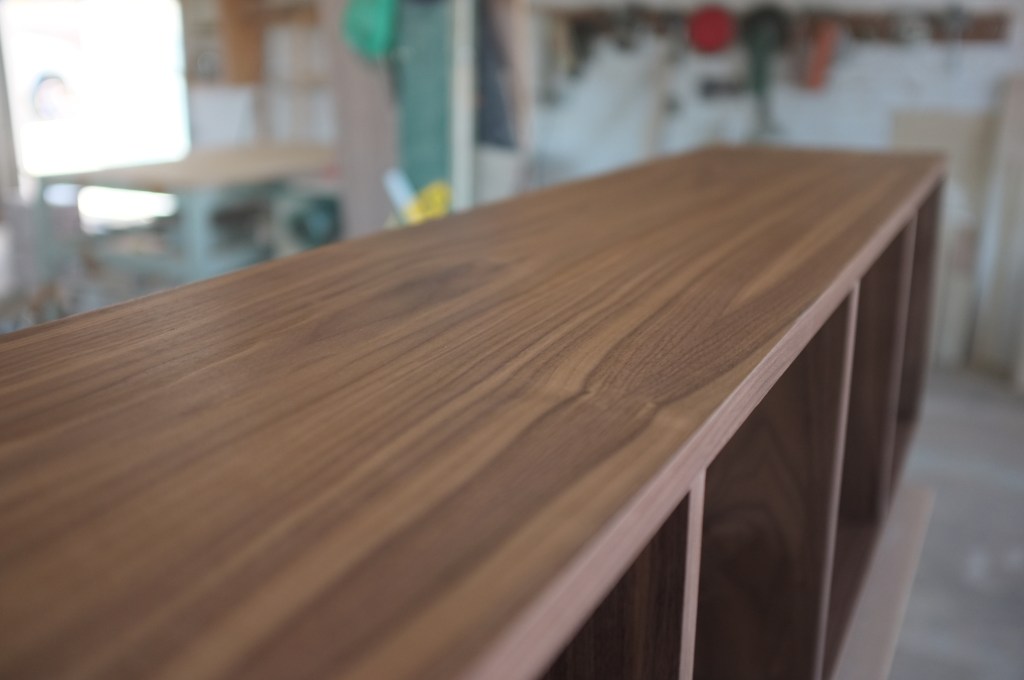
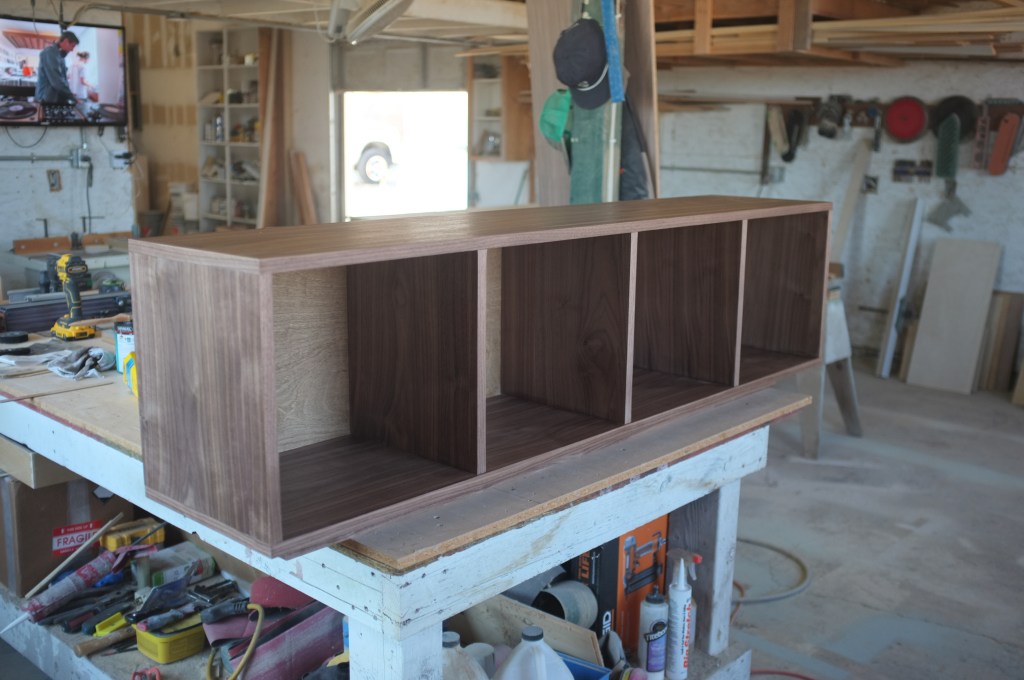
A month ago, I was commissioned to build a cabinet for record storage. My client presented me with a preliminary drawing. We exchanged ideas and agreed on the final design. The purpose: to store records. The aesthetic: to match with the existing hifi furniture. My client has a really neat stereo system. It is an analog system consisting of two Technics 1200 MK7 turntables, a beautiful handcrafted 2 channel mixer by Condesa Electronics, Vincent audio components, and Wharfedale Linton speakers. The cabinet will match the vintage look of the speakers while retaining a contemporary feel. We chose a walnut veneer for the cabinet with a clear satin lacquer finish. The exposed ends will be wood matched edge-banded. One of my suggestions during the initial conversations was to opt out from the mid-century feet for an inset toe-kick construction. The reason being to keep the cabinet from bowing in from the considerable weight it will be carrying from the records. Additionally, the toe-kick will eliminate any dust from building up underneath the cabinet over time. Now to the building process.
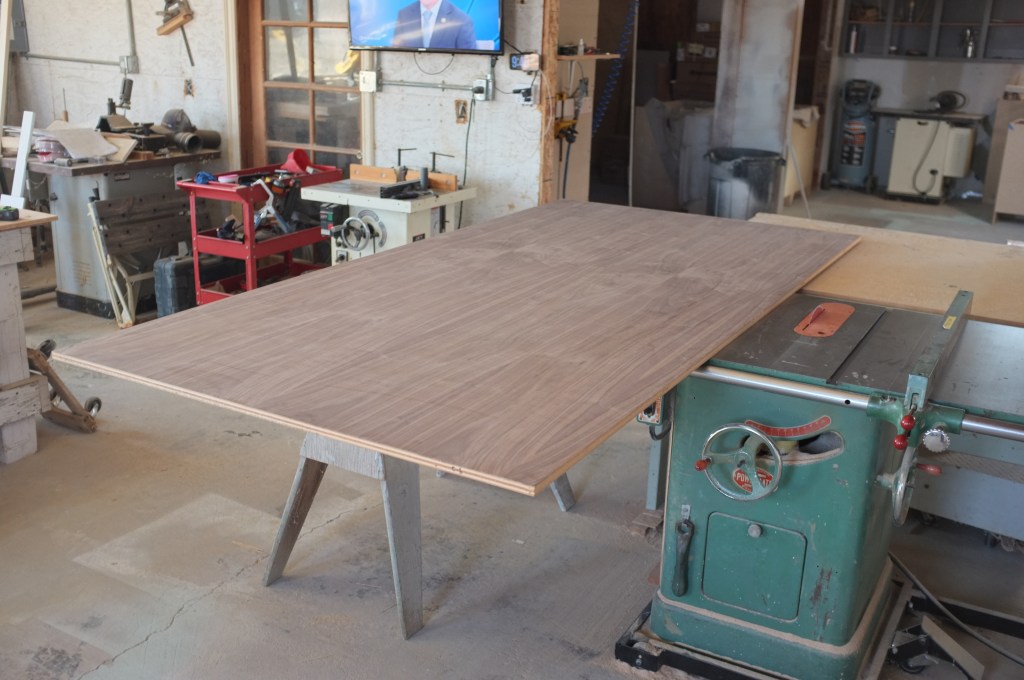
Measuring the pieces with as minimal waste possible. This I learned from my experience working at commercial cabinet shop. It takes a bit of prep work in this stage, but with a smart plan, this will save the guess work and prevent errors during the build.
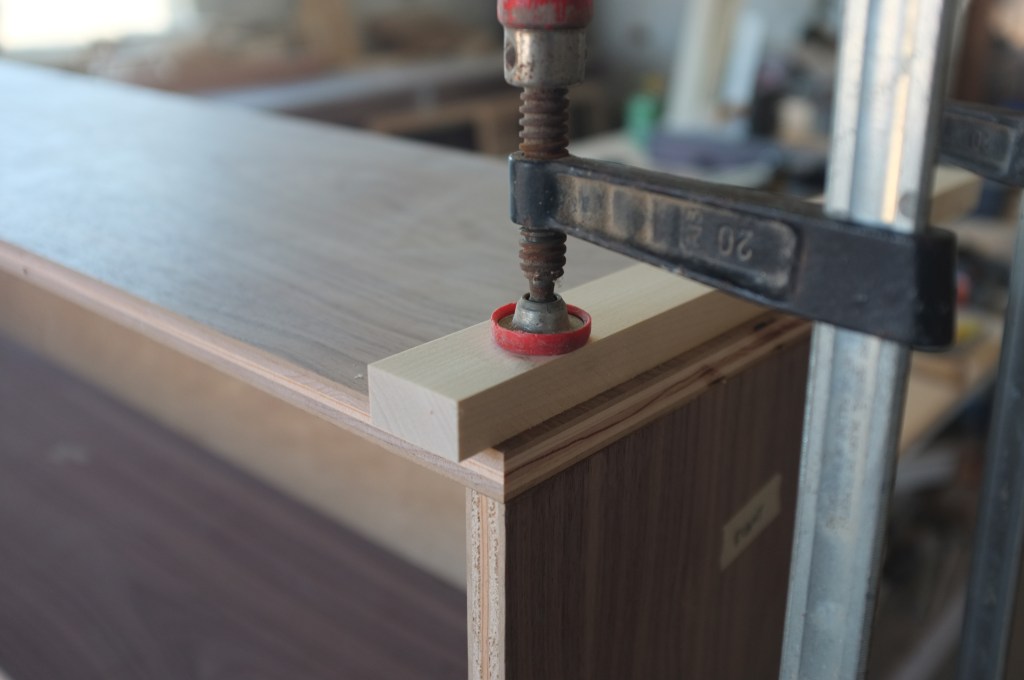
I use a mix of construction screws, 18 gauge brad nails, and wood glue to attach the pieces. Edge-banding consists of walnut veneer, contact cement, and removing the excess with a router. I use an orbital sander with 220 grit to prep for the finishing stage.
I use a polyurethane finish for the clear coat, applying each coat with a brush sanding in between coats. The poly coat gives the grain a warm luster with a durable surface.
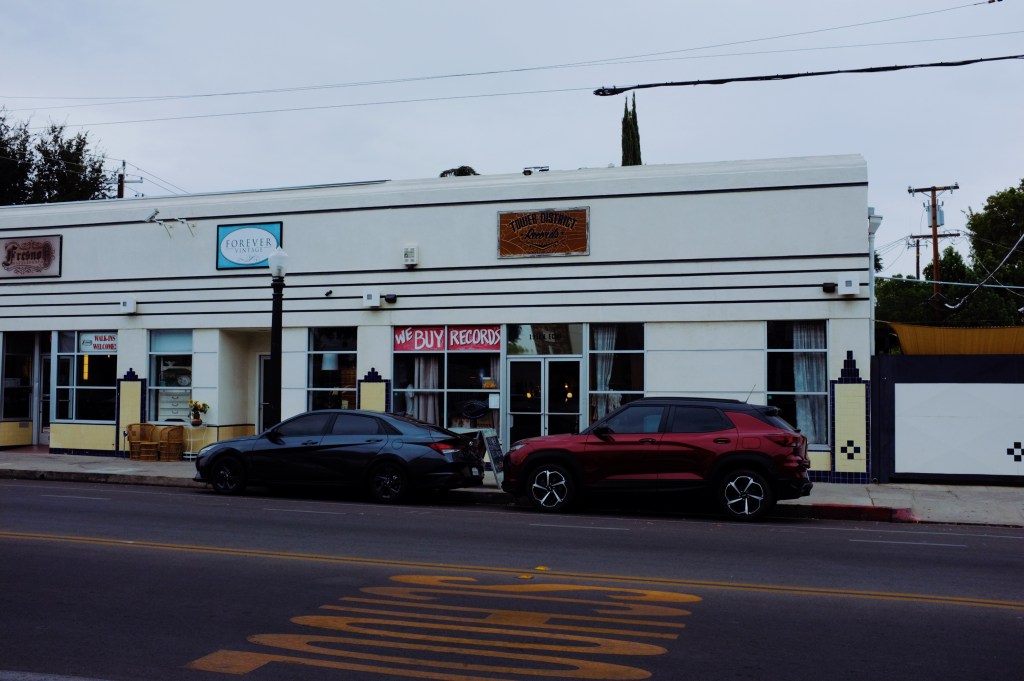
It’s a gloomy Thursday afternoon in Fresno’s Tower District. A tropical storm hit Baja bringing rainfall and thunderstorms through California today and tomorrow. I’m sitting on a bench in front of Ampersand’s ice cream shop. It’s nearing noon and the small strip of local restaurants will soon bustle with locals and students. I can smell the aroma of food coming from a bodega nearby. Moto’s serves a delectable menu of Italian style sandwiches and wine. It’s almost time for Tower District Records to open. My go-to spot for digging jazz and soul records in the Central Valley.
One of my exciting digs here was finding Azymuth’s Telecmmunication LP a few years back. I would come back and find another Azymuth LP, and another from a following visit. Azymuth is one of my favorite jazz groups from Brazil. I discovered them from a documentary called Brazil In Time where Madlib mentioned their name.
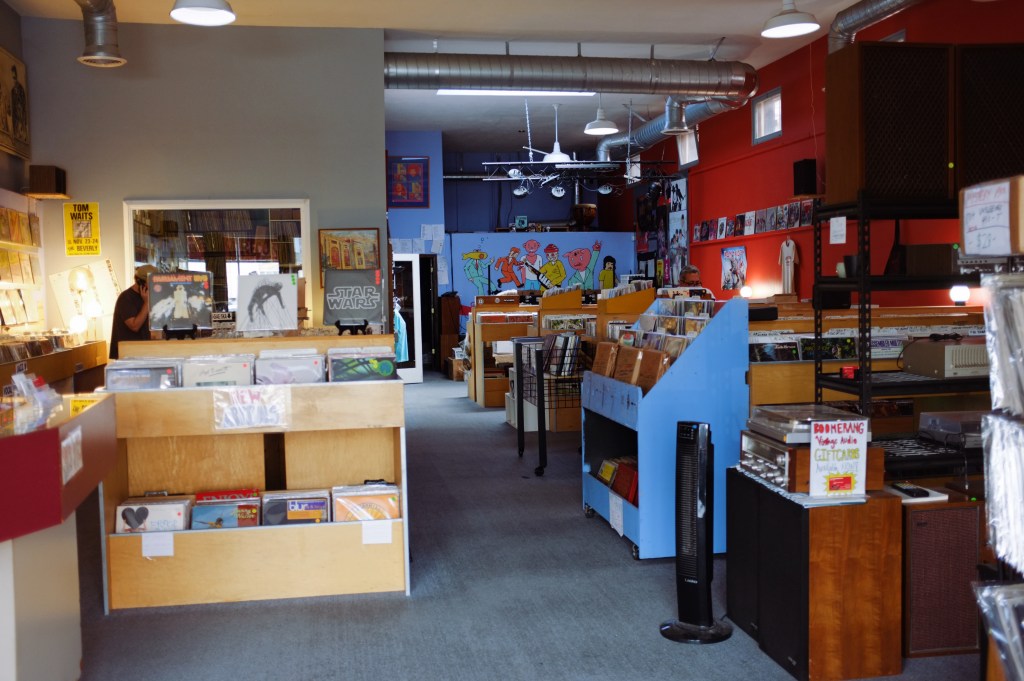
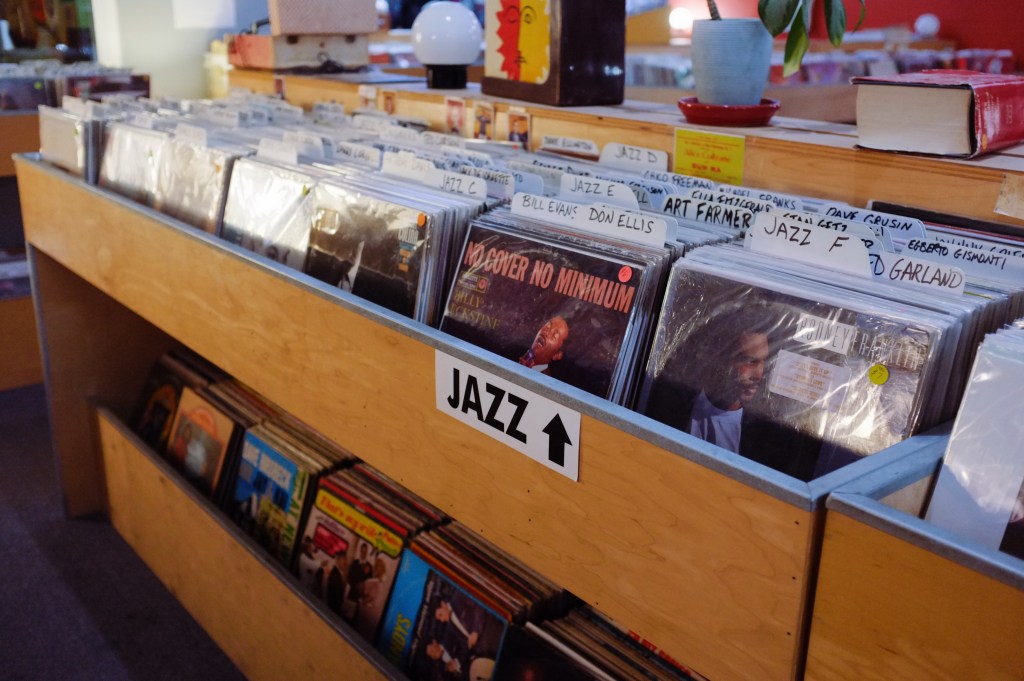
The doors are finally open. You’re welcomed by Brian at the front desk, who I know as a local musician. We catch up with each other’s busy lives, talking about past rock gigs and the upcoming ones. We also discuss about a show that we are both helping out with at our friend’s nursery up in the rolling hills of Prather, near the Sierra Nevada mountains. More about that on a later post. A series of phone calls ended our conversation and I segued to the new arrivals bin, a plethora of classic jazz LPs, psychedelic rock, contemporary pop, classic rock, punk rock, and obscurities. To the left is the jazz section in two rows labeled by artist. Above is the collector’s wall and cradled below is a bin with records by local and touring artists.
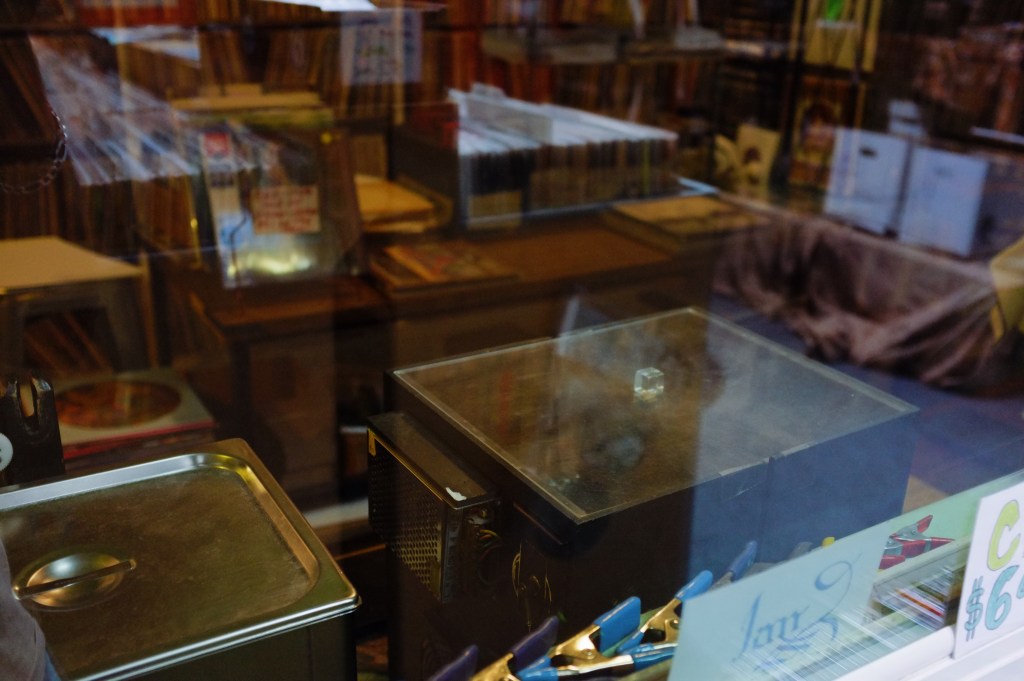
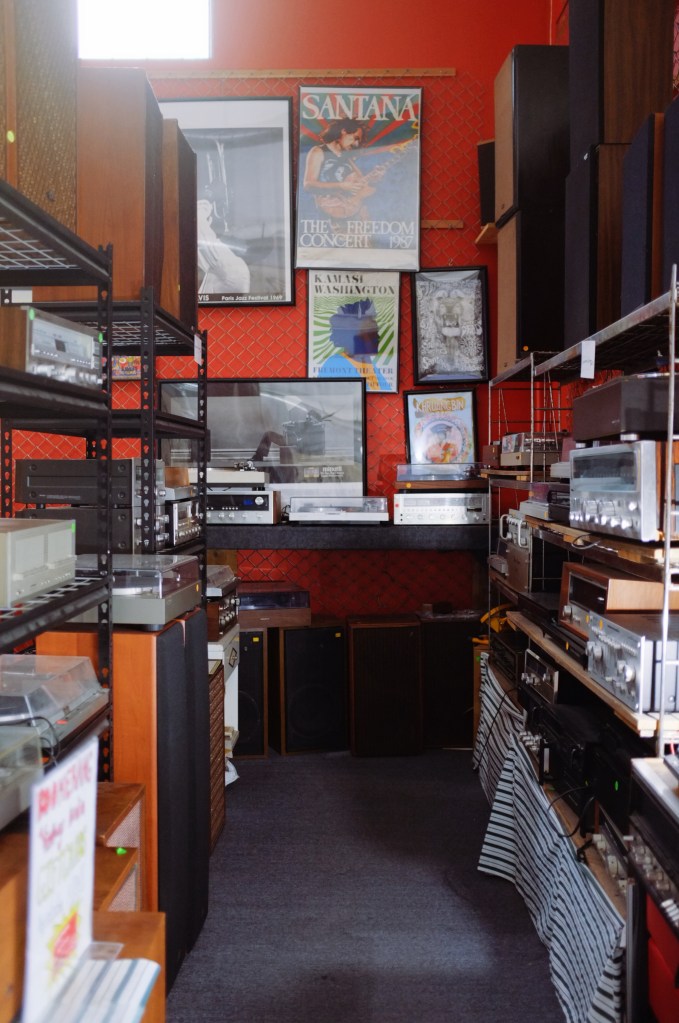
At the end of the jazz section is a large glass window where you can see an archive of records. This area seems to be a room to visually inspect and clean vinyl. What appears to be an ultrasonic record cleaner sits on a desk at the edge of the window. Opposite of the jazz section are the Soul and R&B records. Across from the that section is a rather extensive selection of classic rock LPs. Walking back up towards the entrance is an area of vintage audio gear sold by Boomerang Vintage Audio. I bought a pair of KLH speakers here that I use daily in my cabinet shop.
I see the owner, Nick, also a local musician, and we chat for moment until another friend of mine walks in and we start to chat. I think you start know why this is my go to spot for record shopping. After catching up with good company, I continue to search the bins. I pull out a record by Brazilian song writer Gilberto Gil called Nightingale. Produced by Brazilian composer Sergio Mendes and released on Elektra records in 1979. This album features a mix of jazz, soul, and Brazilian grooves. One stand out track for me is Maracatu Atomico, a remake from an earlier album by Gil called Cidade do Salvador to which to add is a cover version of the original song composed by Jorge Mautner and Neson Jacobina in 1974. I discovered Gil’s version from a mix by Floating Points called You’re A Melody. That mix is the reason why I began to collect records in the first place.
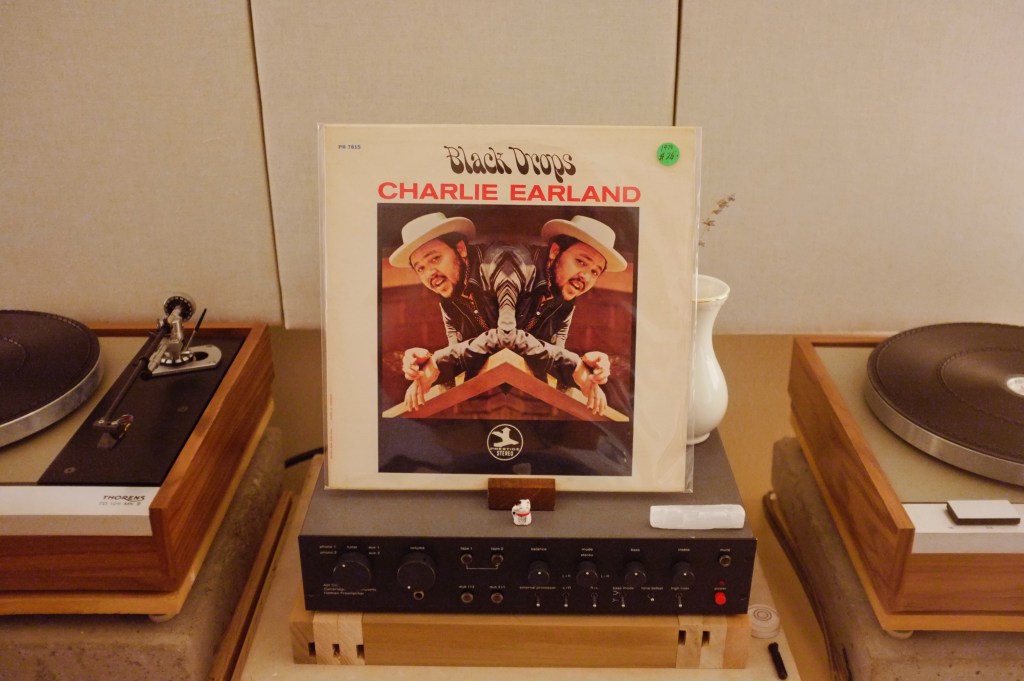
The second record I picked up is Black Drops by organist Charlie Earland. Recorded on the Presitge label in 1970. This second album release by Earland features cover songs like “Sing A Simple Song” (Sly Stone) and “Raindrops Keep Fallin’ On My Head” (Burt Bacharach) and transforms them into soulful groovy rearrangements. Earland is backed up by heavy talent here with Virgil Jones on trumpet, Jimmy Heath on tenor and soprano, Clayton Pruden on trombone, Maynard Parker on guitar, and Jimmy Turner on drums.
I head out to Moto for a late lunch. The lunch crowd has dwindled. I order the Sando Special. A fancier version of a BLT. Accompanied with a crisp Topo Chico.
Hey there, welcome to my new blog, or at least an attempt to writing about my interests and documenting my record shopping adventures. Yeah, I know, I could easily just do the same on an overly-saturated social media platform, doom scrolling endlessly until I find my cat judgemetally staring at me because I’ve been distracted by cat memes. This ends now. So here I am, thinking of what to write about to initialize this blog. I can start with my listening room, perhaps. My safe space from the outside world. And how I often rearrange the stereo system or build concrete blocks for isolation. Maybe that’s a pretty good start. The DIY approach to building a listening room. For a non-writer, that was easier than I thought it would be. Stay tuned, I’m onto something.








 Meztisoul